Every week, GIES is here to give you the bullet points on what you need to know about the news in the gaming industry. Every month, we’re here to go a little deeper. Come for the headlines, stay for the metaphors.
High(Guard) Expectations
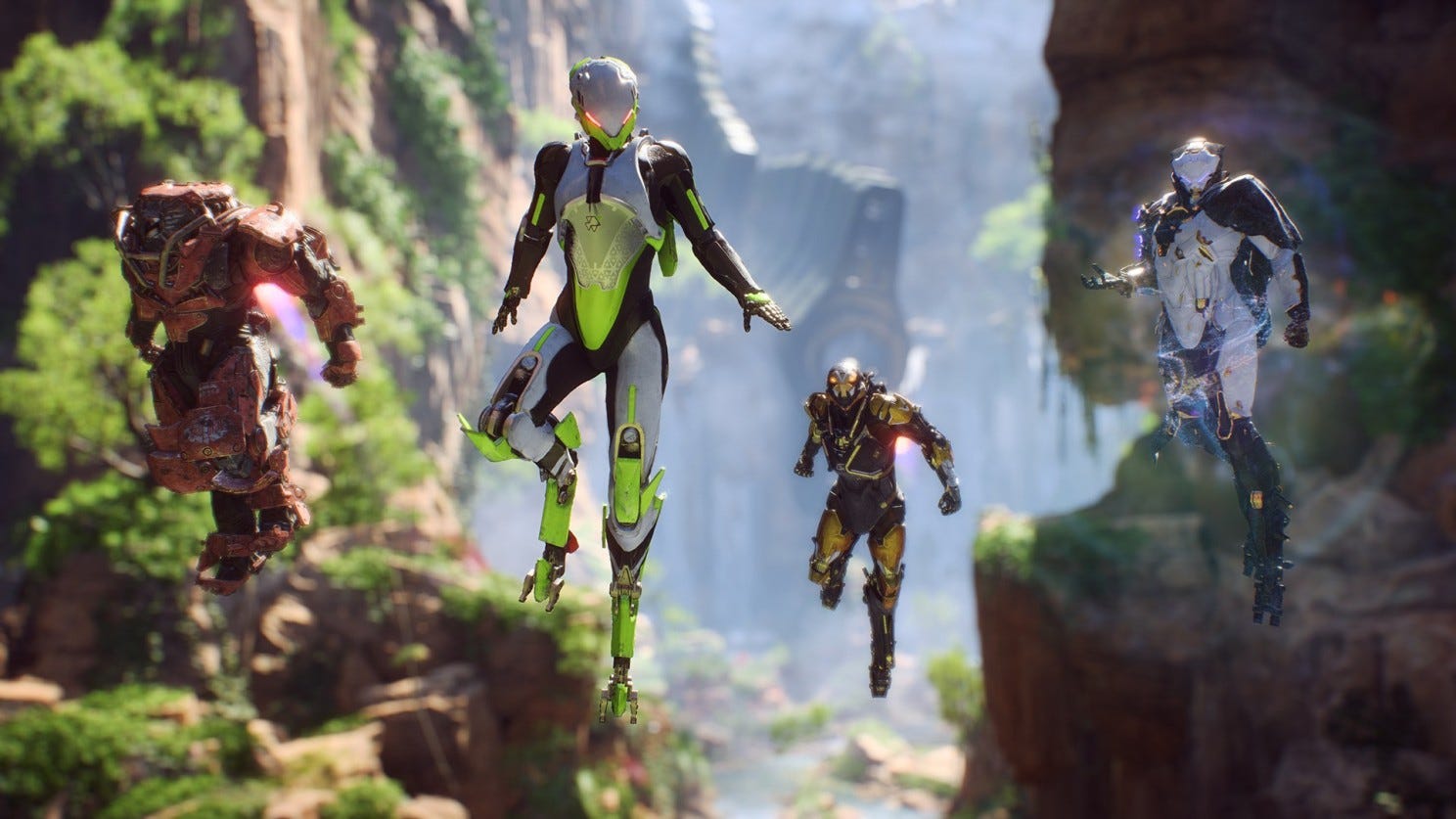
The basic contours are familiar. A new hero shooter, possessed by a certain level of visual polish but lacking much in the way of a visual identity. A splashy introduction followed by cratering player counts. Some idiots waving the word woke around. Maybe its Concord, maybe its Hyenas, Suicide Squad, even all the way back to Anthem. It’s a list nobody wants to be on. Is Highguard the next name on this list?
Highguard became an internet punching bag in many ways because of its prominence. The Game Awards reveal thrust it into the crosshairs — people saw that sort of slick presentation that stops just sort of a true art style and they lumped it in with those other gigantic projects. Gamers, especially of the more online variety, are cynical. They like it when big things fail. Highguard smacked of the institution and thus the sentiment turned sour.
But this is not the big new project from Sega or Sony, EA or WB. This is a new self-publishing studio —albeit an obviously well-funded one—with only itself and its investors to answer to: maybe it could be different. Or, at the very least, we can always hope that it can be different. I am not familiar with Wildlight’s P&L, runway, projected revenue, investor expectations or any of those things that ultimately determine whether a thing succeeds or not. Instead I’m just going to take a quotation from Lead Designer Mohammad Alavi in a recent PC Gamer article at face value:
“Honestly, we don’t need [player counts] to be super huge in order to be successful,” he explained. “We’re a small team. A six-player match [Highguard’s max player count at launch] is not hard to find. What we’re really hoping for is a core group of fans that love us. That will allow us to grow. Being the ire of the internet hate machine sucks, but at the same time, I try to just focus on making the best game I can and getting that game into people’s hands. At the end of the day, that’s all that really matters.”
All the other names on that list were major products from big operations that obviously required player counts to succeed. They failed because they didn’t sell, sure, but more to the point they failed because sales didn’t get to where they needed to be. They failed because they were developed with unrealistic expectations in mind.
If Wildlight understands this – and public statements indicate that they do – there is no reason to assume there’s really anything wrong here.
The industry, now and over the past few years, is primarily struggling with managing expectations. There used to be certain assumptions you could make about how certain things would perform, and these assumptions are now gone. Every project that isn’t GTA or The Elder Scrolls or The Legend of Zelda needs to find a way to be comfortable with less sales and smaller player counts to be considered successful. Every project needs to know how to start small and grow, or to stay small and be happy. Publishers and investors need to understand this as well as investors.
This is pretty clear when you look at the sort of indie hits we’re always talking about at GIES, Peak and Schedule One or whatever. These are games designed to be succesful at a small scale that hey, wound up with a whole lot more than they needed.
We all know about No Man’s Sky — another game that got smashed in the face by its position at the end of a major press conference. One launch happens, good or bad, the dust settles into something. Is that thing enough to press on into the future? If so, that’s all you can really ask.
That’s the month. Below, we’ve got a pair of case studies from some of our consultants diving into how their specialties intersect with the headlines this month. If you want to hire any of the brilliant minds at Mighty Diamonds, head to our Website.
Don’t look up: why climbing keeps coming back in games

Don’t look up. The phrase comes from the movie, but it also describes a quiet default in modern game design. As games scale, they increasingly push players forward, outward, and sideways: bigger maps, more icons, more parallel objectives. Horizontal sprawl becomes the standard answer to engagement.
And yet, some of the most resonant experiences of recent years do the opposite. They ask players to slow down, commit, and look up.
With the release of Cairn, climbing is once again positioned not as a traversal layer, but as the experience itself. Not a genre, but a design response. One that cuts through abundance with a single, visible promise: there is something above you.
What changes from game to game is not the direction. It is what climbing is used to achieve.
When climbing is about spectacle
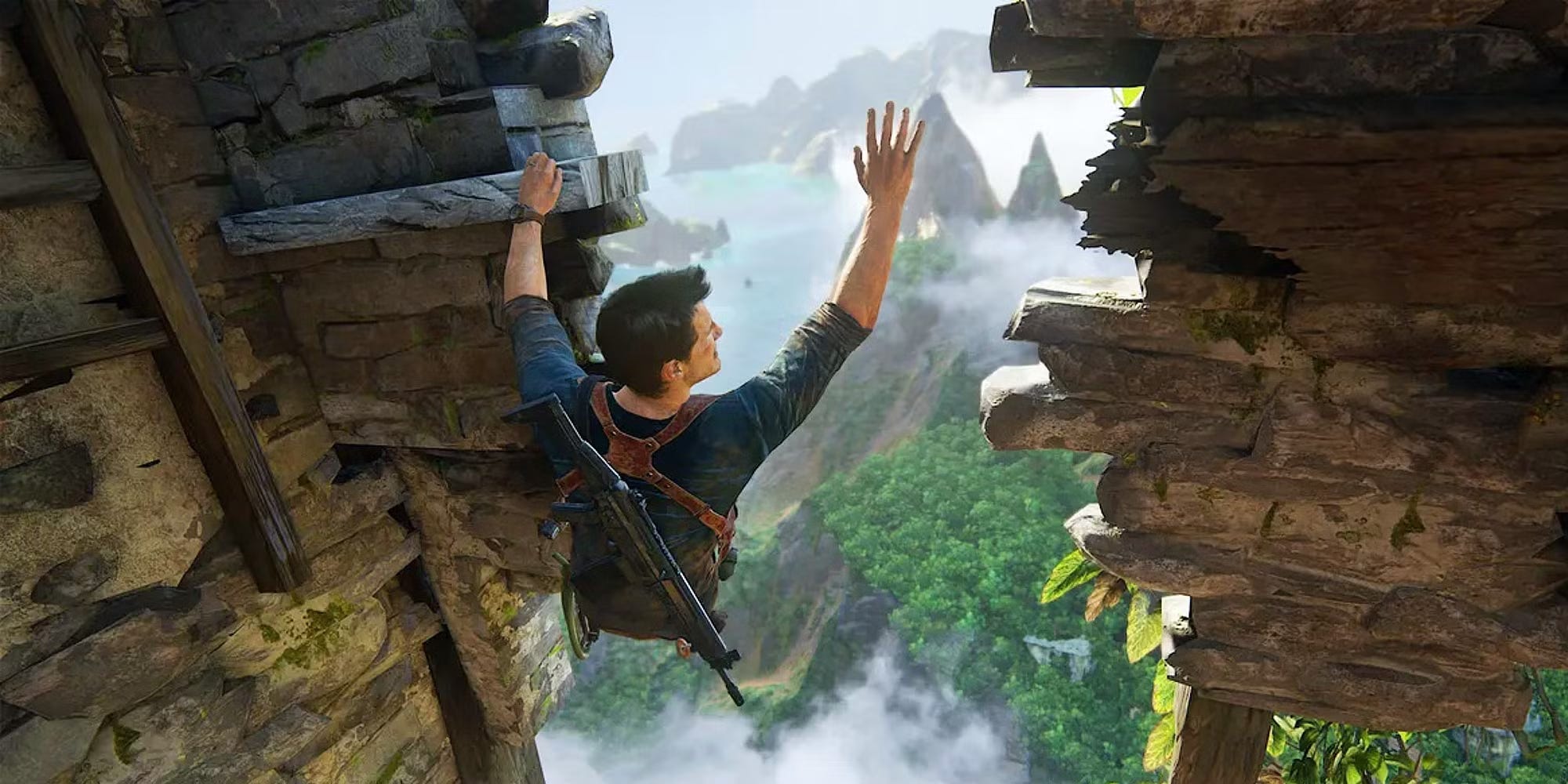
In franchises such as Tomb Raider, Uncharted, and Assassin’s Creed, climbing primarily exists to preserve the flow.
It paces the experience between action beats, frames danger and scale, and guides players through carefully authored spaces. These systems are intentionally forgiving. Handholds are readable, animations absorb mistakes, and failure is rare or scripted. The player is meant to feel exposed, not tested.
Here, climbing functions as cinematic language. Verticality supports fantasy and momentum rather than mastery.
When climbing is the objective, and failure is the feedback
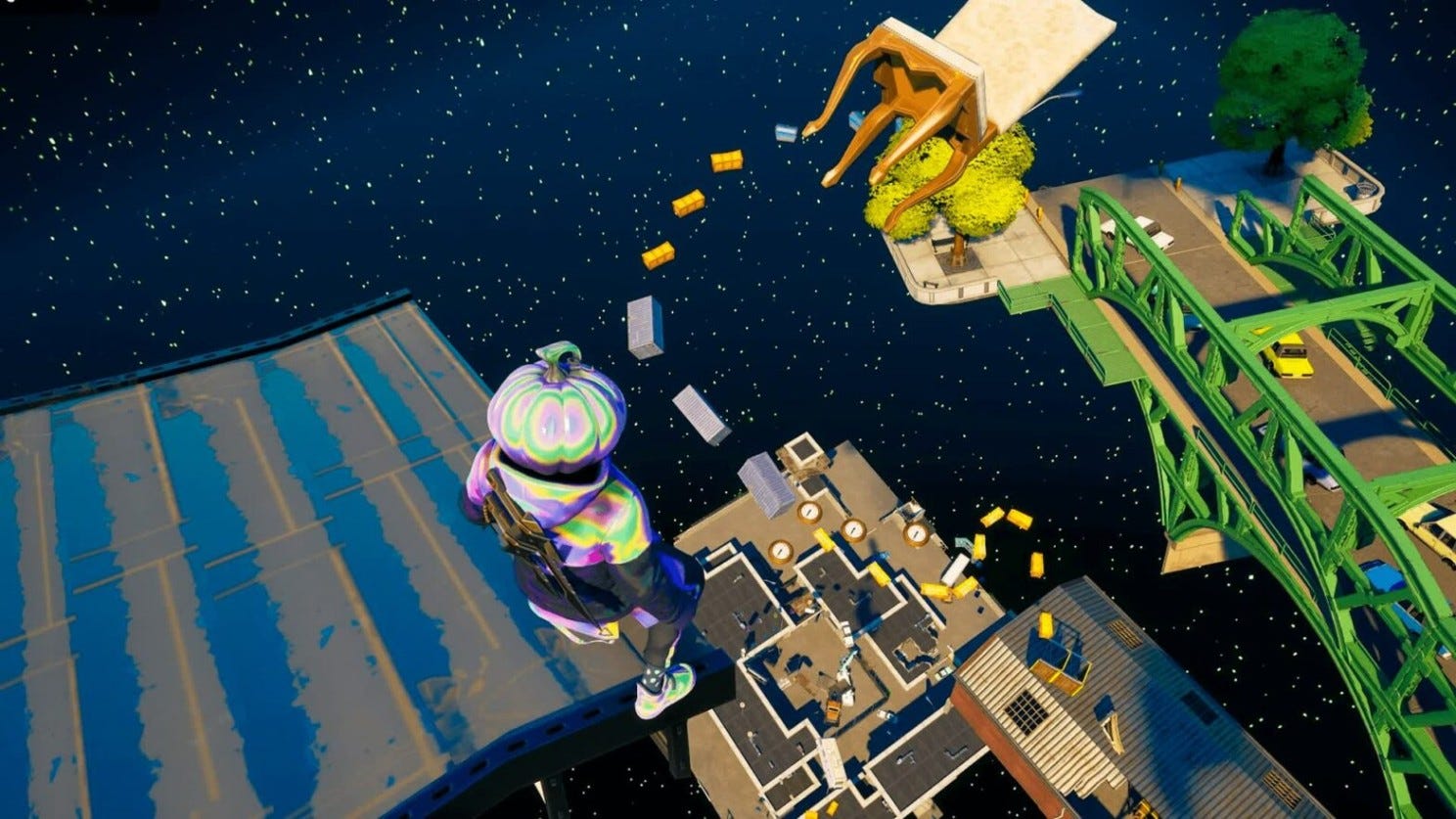
Some games strip that framing away almost entirely. What remains is a simple contract: go up, and don’t fall.
This is the core of Getting Over It with Bennett Foddy, Only Up!, Chained Together, and a large number of Fortnite Creative maps built around vertical parkour or no-checkpoint climbs.
In these experiences, the goal is visible from the start. Progress is purely spatial. Failure is legible, public, and often costly. There is no story required to justify the ascent and no tutorial needed to explain success. Looking up explains the objective. Falling explains the mistake.
Here, climbing is not traversal. It is the game. And failure is not a punishment layered on top; it is the feedback loop.
When climbing becomes the main protagonist
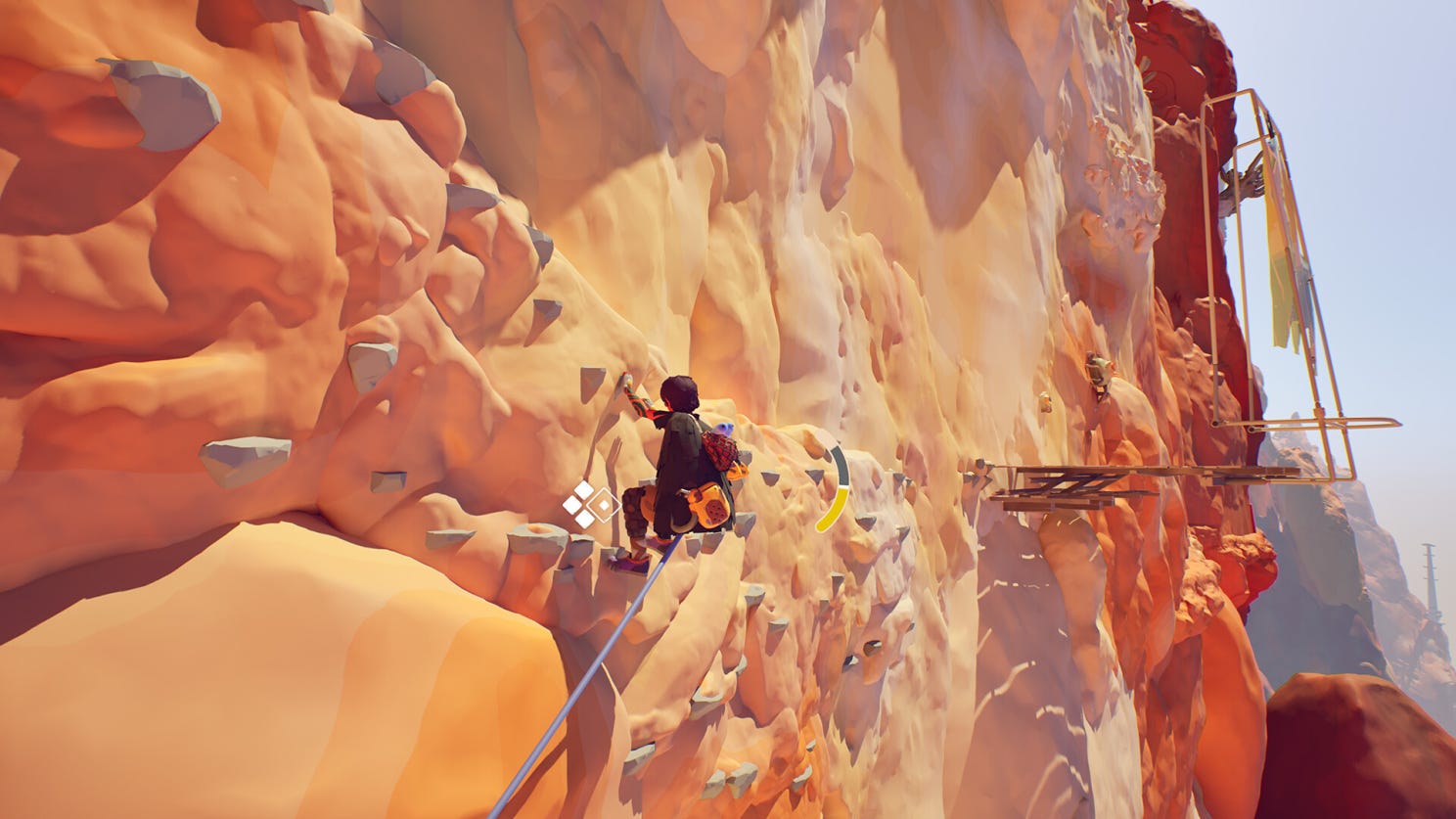
Other games use climbing not just as a challenge, but as the lens through which tone, pacing, and meaning emerge.
In Jusant, ascent is rhythmic and contemplative, with friction deliberately softened to preserve flow. PEAK adds a social layer, where success and failure are shared, and trust becomes part of the climb. Baby Steps goes further still, making even basic movement awkward and intentional, so that progress feels fragile rather than triumphant.
In these games, failure still exists, but it is not always the spectacle. The mountain or tower is no longer a backdrop or an obstacle course. It is the narrative device itself.
Why this keeps working (and why it matters now)
Climbing keeps coming back because it solves a problem the industry keeps recreating. As games scale, they tend to add breadth, featuring larger maps, more systems, and more parallel objectives. Progress becomes diffuse. Direction becomes abstract. Players spend more time navigating choices than committing to action.
Climbing does the opposite. It collapses complexity into direction. There is one axis of progress, the goal is visible, and commitment is explicit. Whether it appears as a cinematic spectacle, a failure-driven challenge, or a narrative ascent, climbing removes ambiguity without adding scope. In a medium increasingly defined by content abundance and attention scarcity, that distinction matters.
You don’t progress because the game tells you to. You progress because you can see where you are going. That is why climbing keeps coming back in games.
What’s Dave playing?
Mio: A little bit of this thing so far, not too much. A nice, perfectly serviceable Metroidvania that isn’t as challenging as certain silk-themed Metroidvanias I’ve played recently.
Sifu: I keep playing this thing because I’ve been super busy with work, and because it is relatively satisfying in 3-5 minute chunks. Find yourself a game that works like this, is my advice to you.
Gies is a free-for-all newsletter | Press F to support us!
About Mighty Diamonds
Mighty Diamonds is a strategic video game consultancy specializing in Publishing, Design, Production, Marketing, and Business.
Our mission is to empower developers in creating exceptional games.
Learn more at mighty.diamonds.
Get Gies every Friday
Curated factual digest of the gaming industry news in 5 minutes. Free.