Entering Our Golden Years

On a recent trans-oceanic flight, in-between complimentary snacks and toddler maintenance, I played Pragmata. I played it on the Switch 2 with remarkable success, which is not what I’m talking about here but still worth noting. Toddler maintenance turned out to be a pretty decent theme for the game, where a workaday astroguy goes to the moon where his entire team is promptly killed but he is curiously unaffected. He dives headfirst into becoming a father figure for a little robot girl and shoots some robots. It had some great design, a satisfying core combat mechanic and a serviceable story.
Everyone in the Discord I was in talked about Pragmata for a few days. It popped up in the discourse for a second and then largely receded. I did not finish it, but the flight ended and I can hardly be blamed for that.
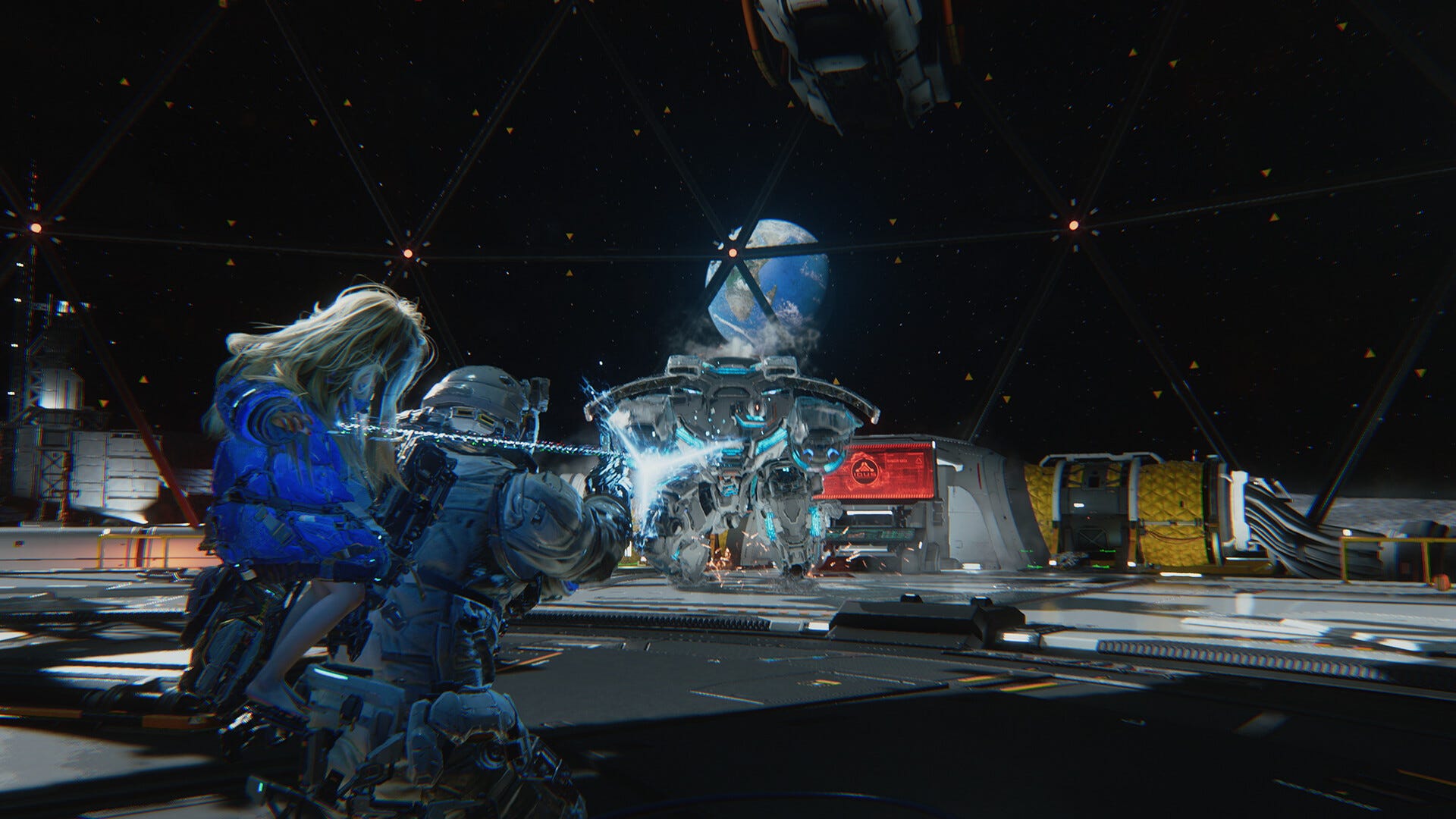
Pragmata is the sort of game that feels rare but can be immensely satisfying when it shows up. A straight-ahead, satisfying little game with a couple surprises but not too many, a well-made thing with an end. The same was true last year with Mafia: The Old Country, a classic story-based cover shooter that Take-Two was apparently very happy with. The same seems to be true of 007: First Light, which I’m actually going to go buy right now.
*Buys 007: First Light*
These are not the live service forever games that the big publishers lusted after over the last decade or so. These are not the friendslop games from funky little indie teams, these are not explosive UGC successes like Grow a Garden or Steal a Brainrot, I don’t think there’s really enough of them to even call a trend. These are just games, man. Games like the kind I’ve seen before, games that are basically part of the same console sort of story that started with the PS1. These are not comfort games so much. But they are comforting games.
For reasons I cannot remember right now, I was recently looking at a list of top-grossing musical acts in the world. And yeah, Taylor Swift is on top. There’s no way around that one, think of her Steal A Brainrot or whatever. There are some other more modern acts in there, like Ed Sheeran and The Weeknd. The rest though? Not a single name that wasn’t big when I was in highschool, and many that were big for long before that. Elton John, Coldplay, Rammstein, Guns & Roses, Bruce Springsteen, you get the idea.
Most creative industries are always trying to engage the new generation. All industries, actually. Relevance must be achieved, financial futures must be secured, the ever-present specter of death batted back with the right marketing campaign. And yeah, you’ve got to do that. But it’s important to remember that people like me exist, and actually quite a few of them. We like games, we’ve got money, and we can pay enough to support high quality AAA games like the kind we grew up with. And I’ve got a lot of video gaming years left in me, knock on wood.
This industry will have to grow and change, this much is obvious. This particular style of AAA game is no longer cutting edge and is no longer all that cool. We can swallow that. Games like 007, Pragmata and Mafia: The Old Country are still good regardless. And they’ve got more years left in them than you think. There are worse things to be than The Rolling Stones.
That’s the month. Below, we’ve got one of our members diving deeper into another topic. If you want to hire any of the brilliant minds at Mighty Diamonds, head to our Website.
Looking for an Edge

I was the bearer of bad news at Nordic Game on Wednesday, and the write-up didn't soften it.
Three things I said, and still believe.
One, we've hit a technical plateau: PS4-to-PS5 upgrades brought faster loading, not a new medium, and nobody's buying hardware for 8K or 240fps.
Two, new releases now compete with a back catalogue that already looks current, so a player can start on Uncharted at a fraction of the price.
Three: Asian publishers learned to make great games for Western audiences and increasingly don't need Western partners, and there's a version of the future where production shifts east, the way manufacturing did.
None of that is comfortable. I won't pretend otherwise.
But "the old growth engines are stalling" is not the same as "growth is over." It's a change in the source of the edge. When hardware cycles and platform power stop doing the work, advantage moves to whoever understands players, spending, and attention better than the next studio.
That is exactly the environment where good market intelligence stops being a nice-to-have and starts deciding who makes it through.
So yes, it's a hard transition. It's also the moment when the work I do matters most.
It's times like these you need to stop guessing and start knowing.
What’s Dave Playing?
Tomodachi Life: Nintendo’s bonkers life sim about a bunch of Miis that say whatever the hell you want them to in weird robot voices has taken my household by storm. You don’t control these Miis, you merely orchestrate their world as a benevolent of malicious caretaker in this strange little title that my daughter won’t put down.
Dynasty Warriors: Origins: It had been a tough decade for Dynasty Warriors fans. But this ludicrous take on the Romance of the Three Kingdoms is back in what may be its best form yet, despite some major shifts. There’s also way, way more story than there has ever been before, which I’m loving. I don’t think I’ll ever read Romance of the Three Kingdoms, but I’ve pieced together a fair amount of it over the years through games.
Get Gies every Friday
Curated factual digest of the gaming industry news in 5 minutes. Free.