Every week, Gies give you the bullet points on what you need to know about the news in the video game industry. But once a month, we’re here to go a little deeper. Come for the headlines, stay for the metaphors.
The Harder They Come!

What can you buy with billions in annual revenue and one of the most popular games in the world? Not 1,000 people’s jobs, I’ll tell you that. Epic Games, makers of the Unreal Engine, Jazz Jackrabbit, Fortnite: Save the World and its spin-off Fortnite: Battle Royale just cut 1,000 jobs, citing an overall decline in Fortnite engagement and the need to keep the lights on. This is the gaming industry, so we can’t get up to numbers quite as impressive as Oracle’s 30,000 layoffs, but even so this was a bloodbath.
From one angle, this looks like a classic modern story magnified to the scale of global phenomenon. A company stumbles into a hit and then expands quickly and ferociously, spending and expanding with the idea that interest will never decline, and they can keep making this amount of money forever. The winds change quicker than new projects come to fruition, and the whole thing comes crashing down. That definitely happened here, but it’s not the whole story.

Epic Games in no way intended to be this reliant on Fortnite: Battle Royale in 2026. Sweeney and co. used their windfall to make a series of bets commensurate with the size of said windfall. Other companies use their hit game to fund another game. Epic funded a PC gaming storefront intended to rival Steam, a massive lawsuit against some of the most valuable companies in the world, a spree of acquisitions and a broad-reaching attempt to transform their battle royale game into a UGC platform. It also managed to force the broader gaming industry’s hand on cross-platform play. I’m probably missing some things here.
What can you buy with something like $5 billion in annual revenue? Not a PC gaming storefront, I’ll tell you that, too.
Epic Games ran up against modern monopolies. It did so intentionally, forcefully, and with success that can only be called mixed. Steam was entrenched to the point where people were simply not going to change their buying patterns no matter how many free games they got. The company managed to defeat Apple and Google but spent ludicrous amounts of money in the process: Apple and Google seem more or less fine. On the UGC platform front, player counts remain a rounding error next to Roblox.
Sweeney always couched the company’s anti-monopolistic activity as a moral responsibility as much as a business strategy, and there is likely a significant degree of truth to that. There was always something remarkable about a billionaire willing to spend hundreds of millions of dollars while saying stuff like this:
“There’s really no price that isn’t worth paying for freedom, for all developers and the future of gaming… And if we spent a billion dollars so far, that’s a small price to pay for the future freedom of our company and of all of the others who want to participate in the market.”
In the end, however, monopoly is enforced through a range of different mechanisms, and all of those that Epic sought to challenge were able to weather the storm with minor inconvenience. And when we say Epic paid the price for that, what we really mean is that Epic’s employees paid the price for that, in 2023 and again last week. I wonder if those that got laid off would agree with the above quote.
Fortnite has got life left in it, that’s for sure. But like so many games in a similar position, this life will be lived as a successful, fun title, rather than an infinite ATM capable of funding untold miles of pipe dream. The harder they come, the harder they fall.
That’s the month. Below, we’ve got a pair of case studies from some of our consultants diving into how their specialties intersect with the headlines this month. If you want to hire any of the brilliant minds at Mighty Diamonds, head to our Website.
The Great Decentralization - Tectonic Shifts of 2026

The old guard lie in ruin, and the people will rule.
The world of video games has been cracking open for years now, but here in 2026 the last walls of the gatekeepers are being torn down. Democracy has come for games. Tools, engines and middleware allow single-person studios to create the kind of million dollar games that previously would have required specialized tools years of development and serious investment.
Putting your game in front of a couple hundred million potential players on Steam requires $100 and a couple of hours of documentation reading. Getting them to pay any attention is another problem, but that’s just part and parcel with democracy.
Valve, so far, has owned an increasingly large slice of this shifting market, and it’s hard to imagine that will do anything but accelerate. The slow Valve rollout of hardware attracted a niche, but appears to now be becoming a genuine threat to the console markets. On paper, there’s little the average console can do against a platform that presents a high fidelity experience in the living room, with better access to new and experimental games at better prices with no monthly online fee to play.
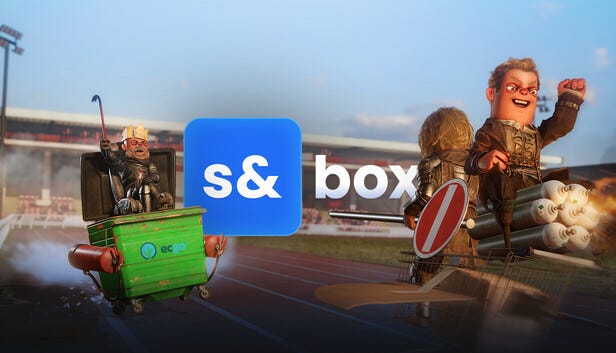
The “Console Wars” are over, replaced by platforms less interested in walling their gardens. And yet even there, the rules never stop changing. Take for example the upcoming UGC platform S&Box (Release date: April 26, 2026), the successor to Garrys Mod (a 20 year old game), now allows developers to be able to export their games as standalone products to be published on Steam with no fee attached.
Let’s read that again, NO FEE ATTACHED!!!
There are so many layers to this, on the platform front, content and asset front and on the engine front. What already seemed like a frighteningly open platform chips away at its last few barriers to clear skies for millions of potential game makers.
It is, in many ways, terrifying. Particularly if you’re a professional that has built your skills and career inside a totally different ecosystem. And yet creativity has a way of bubbling from the bottom up, in games or elsewhere. People forget that both Counter-Strike and Dota, the top 2 games the past 10 years on Steam are both born out of the modding scene, coming out of early UGC platforms like Half Life and World of Warcraft. Allowing people to use the bones of something that came before to build something new is as old as games: a couple of college students made the precursor to Pong using an oscilloscope.
And we’ve been talking about Steam so far: A developer from 10 years ago would barely recognize the Steam of today, and they would sure as hell not recognize Roblox, a wide-open fever dream with CCU numbers that read like exorbitant punchlines to industry veterans. Forget $100: here you really just need an enthusiastic 10-year old.
(correction, is the Roblox enshittification just starting? Read:“New Publishing Requirements & Evaluation Process for Games”)
The decentralization of power in games is real, and it is moving fast. Investments and publishing deals are going to look very different from what is available today. As has been the case for the last couple of decades, we can look to the music industry for a glimpse of the future, where radical openness has reshaped the industry and stitched portions of it back together again ever since Napster. Where once record labels were the all powerful starmakers and arbiters of trend, now the biggest names are the artists themselves: who rake in massive paydays from tours, while companies like Spotify fill the “platform” role by making a huge amount of money and generally not doing anything.
Thank God for Valve!
What are Casey’s kids playing?
Arc Raiders: I guess they are burnt out at the moment and taking a break, it’s been an intense 4 months of fun shooting arcs. But we crave more content that can make us come back. However, my youngest is contemplating building the big project and starting over progression.
Balatro: Gambling is haram for a reason people. If anything, this is the game that will teach you why gambling should not be allowed in society. However, the kids are having fun doing math, unlocking jokers to min/max their strategies and I guess that is a bit less haram than gambling.
Slay the Spire II: This is the game that is played the most on our Steam Deck at the moment. Why you ask? Because the game is not available on PlayStation, and we have our Steam Deck hooked up to the tv in the living room. Prior to StSII releasing, we were playing the first game non-stop. With more content and options, we are enjoying the new game immensely.
Gies is a free-for-all newsletter | Press F to support us!
Get Gies every Friday
Curated factual digest of the gaming industry news in 5 minutes. Free.